Drone Surveyors
Thermal inspection
The radiometric camera on the Mavic 2 Enterprise Advanced, used where the question is heat, damp or trapped moisture rather than what a covering looks like.
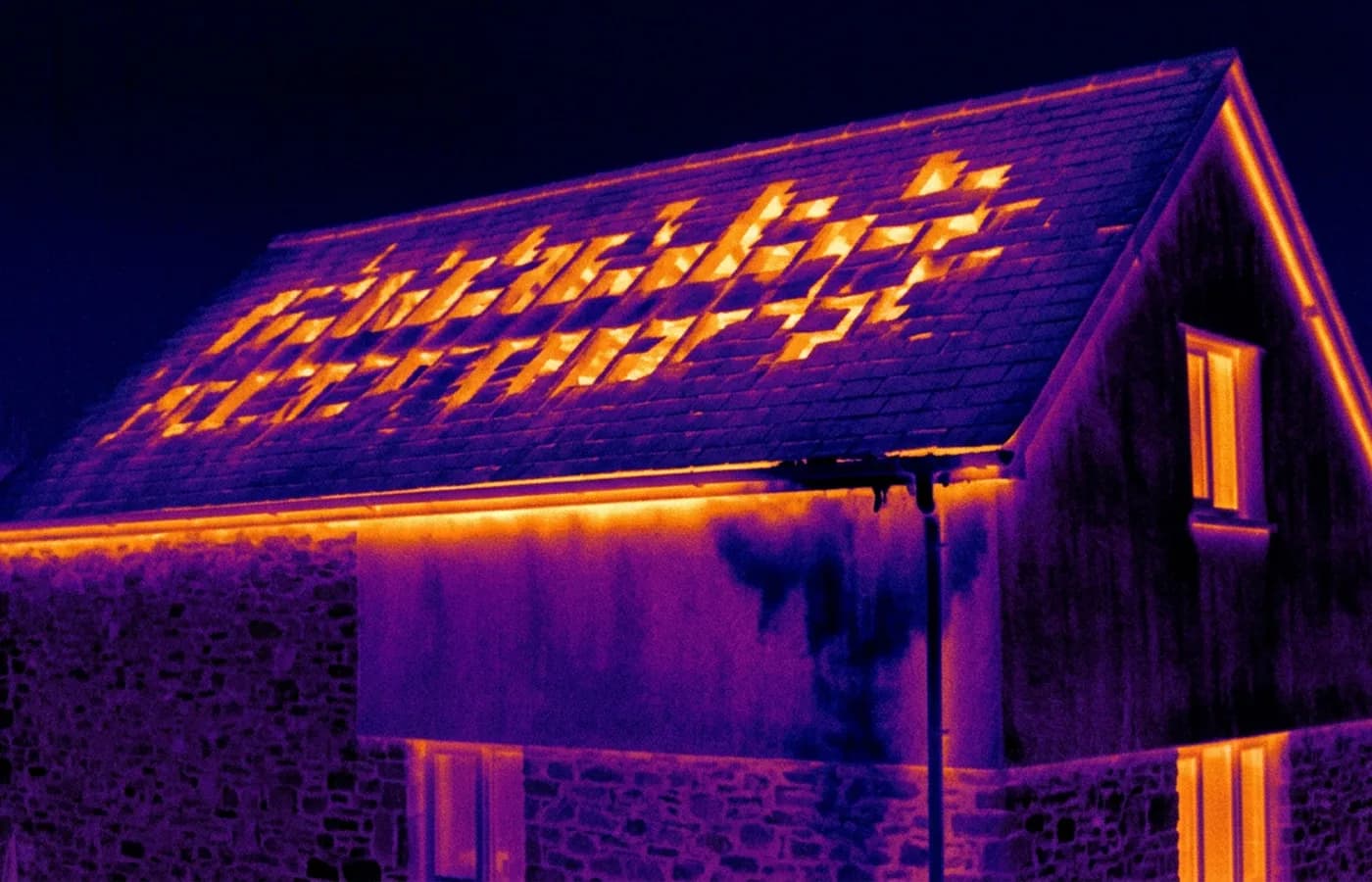
A thermal camera does not see damp. It sees temperature, and damp materials hold and release heat differently from dry ones, which is why a wet patch under a flat roof covering shows up as a shape that has no business being there. Reading that difference correctly is the whole skill.
The camera is a 640 by 512 radiometric sensor on a DJI Mavic 2 Enterprise Advanced, which means every pixel carries a temperature value rather than just a colour. It flies alongside the visual camera, so the thermal frame and the ordinary photograph of the same elevation sit side by side in the report.
It is not a substitute for the visual survey and it is not sold as one. On most jobs it answers a specific question that the photographs have raised, or one the client arrived with.
What is included
- Radiometric thermal imagery of the elevations or roof areas in question
- The matching visual frame for every thermal frame, so the pattern can be read against the building
- A written interpretation of each pattern, including the ones that turn out to be nothing
- The conditions on the day recorded, because they determine what the imagery is worth
- A statement of what the thermal survey could not answer and what would answer it
When it works and when it is a waste of a morning
It works when there is a temperature difference to see: a heated building on a cold morning, a flat roof at the end of a clear night, an elevation that has not had sun on it. It works well for missing or slumped loft insulation, for tracing warm air escaping at eaves and around openings, and for mapping the extent of moisture trapped under a single ply or felt covering.
It is close to useless in the middle of a warm afternoon in July, on a surface still wet from a shower, or on a building with nothing running inside it. Booking a thermal survey in high summer on an unheated barn produces a set of pictures nobody can draw a conclusion from, and it is better to say that when the enquiry comes in than to fly it and invoice for it.
What a thermal pattern actually proves
It proves there is a temperature anomaly at that spot. It suggests a cause, and a plausible cause plus the visual image plus knowing how the building is built usually gets you to the right answer. It is not proof of moisture on its own, and the report is written that way.
Where the pattern points to something that has to be confirmed, the report says what would confirm it: a moisture meter reading, a core sample from the flat roof, or a look inside the roof space. That is a shorter and more useful sentence than a confident claim the imagery cannot support.
On the day
How a thermal runs
- Step 1
Agree what the question is
Missing insulation, a leak that will not localise, trapped moisture in a flat roof, or a cold room nobody can explain. The question decides the time of day and the time of year.
- Step 2
Pick the conditions
Thermal work needs a temperature difference across the building fabric and it needs the surface not to be wet or in direct sun. That usually means early morning, late evening, or the colder half of the year.
- Step 3
Fly the visual pass first
So there is a proper photograph of every area the thermal camera will cover. A thermal image on its own is close to unreadable without it.
- Step 4
Fly the thermal pass
Same elevations, same order, from the same working distances, so the two sets line up frame for frame.
- Step 5
Interpret at the desk
Patterns read against the building and against the conditions, with the ones that have a mundane explanation ruled out rather than reported as findings.
Behind the work
Kit, cover and qualifications
Registered with the CAA
A registered operator with both an Operator ID and a Flyer ID. The Operator ID is the one that has to be displayed on the aircraft, and it is the number a client or an insurer asks for.
A2 Certificate of Competency
The A2 CofC is the theory and self-practical qualification that sits above the basic Flyer ID test. There is no GVC, which is stated here rather than left out, because it changes how some sites have to be planned.
Insured with Coverdrone
Commercial cover through Coverdrone, one of the specialist drone insurers. A copy of the certificate goes out on request before a booking, not after it.
DJI Mavic 4 Pro
The main survey aircraft. A 100 megapixel Hasselblad camera and 6K video, which is what lets a photograph of a ridge from twenty metres away still show an open mortar joint.
DJI Mavic 2 Enterprise Advanced
The thermal aircraft. A 640 by 512 radiometric thermal camera alongside the visual one, so a heat pattern can be read against the picture of the same elevation.
Construction background
The surveying came after years of contracting, so the report is written by somebody who has stood on the scaffold as well as flown over it, and who knows which faults matter and which are cosmetic.
Written report within 48 hours
A process commitment, not a sales promise. The flight is the short part of the job; the report is where the time goes, and it lands within two days of the visit.
No scaffolding, no ladders
Nothing leans on the building and nobody goes up it. That removes the access cost, the permit paperwork and the working-at-height risk from the survey itself.
Thermal
Thermal inspection questions
- What time of year should a thermal survey be flown?
- Roughly October to March for building fabric work, because you need a temperature difference between inside and outside. Flat roof moisture surveys are usually flown at the end of a clear night or shortly after sunset, when the wet areas give their heat up more slowly than the dry ones.
- Can you give me a heat loss figure for the building?
- No. The imagery shows where heat is going, not how much of it. A number would need a different kind of assessment altogether, and any figure produced from a thermal photograph alone would be made up.
- Do you do thermal on solar panels?
- Panels can be flown and hot cells do show, but the useful version of that work needs the array to be generating properly at the time and needs someone to act on the result. Worth a conversation about what you want to do with the answer before booking it.
- Is thermal included in a normal roof survey?
- Not by default. It is a separate pass with a separate aircraft and it needs different conditions, so it is quoted as its own job or as an addition where it is worth having.
Where
Thermal inspection across the South West
Also on this site
See the credentials
Talk to a surveyor with Drone Surveyors
Tell us the address and what you need looking at. Sam Hembury will come back with a fixed price and the next available slot.